A Proven Copywriting Formula You Need to Boost Sales
The P. A. S. T. O. R. framework
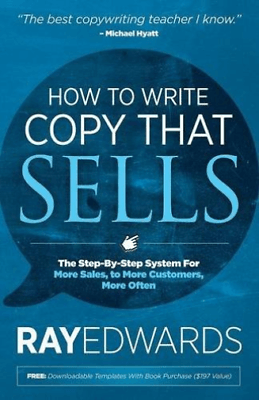
Source: Amazon
Before diving into this powerful formula, it’s imperative to mention his father, Ray Edwards, one of the greatest direct response copywriters and the author of “How to Write Copy That Sells.” He also hosts a successful podcast and runs The Copywriting Academy.
The P.A.S.T.O.R. formula is a proven framework that helps you write copy that significantly boosts your sales.
This acronym originates from the idea of considering the copywriter as a “shepherd” and, like a shepherd, he protects, leads, and acts in the sole interest of his flock; in that case, the flock is your customer.
Before talking about this framework, I want to highlight one of the most important things: when people read your copy, they don’t care about you; they care about themselves.
So, if you want them to click your CTA button, write as people talk when you highlight the problems they have, using words as close as possible to the ones people use.
Below is the P.A.S.T.O.R Framework in detail.
Ray Edwards Copywriting Formula: The P. A. S. T. O. R. Framework
This acronym stands for:
P ➡ Person, Problem, Pain
A ➡ Amplify, Aspirations
S ➡ Story, Solution, and System
T ➡ Transformation and Testimony
O ➡ Offer
R ➡ Response
Let’s break it down…
Person, Problem, Pain
To write compelling copy, you need to identify the person you are talking to.
An essential step is building a “customer avatar,” a fictional character that represents your ideal customer.
You can give it a name, add a photo, and write down the demographics, like job, interests, hobbies, age, gender, educational status, goals, challenges, etc.
This allows you to write copy that meets your customers’ needs and goals.
Once you have identified the person you want to reach, you need to understand the problem they have and that you can solve with your product or service.
The more you know the problem, the better you can describe it, so your readers will feel understood and keep reading your copy, sure to find a solution to their problem.
Now you have to link the problem to the pain they’re going through because of this problem.
Amplify, Aspirations
The next step is to amplify the pain your readers are feeling, highlighting the consequences of not taking action “now” and not buying your product or service.
Then you have to tell your readers what’s going to happen in the future if they decide to buy your solution.
This creates the desire to have your product, motivation because your readers now know there is a solution to solve the problem, and aspirations for a better future, showing, as the author said, the “paradise”, namely the real possibility to see their problem solved.
Story, Solution, and System
Now it’s the moment to tell the story, a “real” story on how the problem can be solved, presenting your product or service as the solution to the readers’ problem, showing with proof the system that solved the same problem for other people and how they can do it too.
The story can be from a previous customer, from a friend, or even a personal experience, but it must be true.
Transformation and Testimony
Transformation is related to the result readers expect from your product or service.
They buy from you because they trust your story, and then they expect the same transformation, the same big promise you made in your copy, for example, losing weight, learning a profitable skill, building an online biz, etc.
Why should your readers trust you? You have to answer that question by showing them the testimony.
How can you do that? Stressing the results achieved with your product or service, telling your readers real stories about happy clients, people who have already bought from you, used your product or service, and solved their problems with your product or with video testimonials recorded directly from your previous client.
Offer
Now let’s move to the “O” in the P.A.S.T.O.R. Formula, which stands for “offer”. Here you have to talk about your product in detail.
As Ray Edwards said, the sale has to take up only 20% of the copy. The remaining 80% has to be dedicated to your readers, their problem, and the transformation.
Response
Finally, you have the “response” section where you have to tell your readers what action they have to take. Be direct to lead them to click the buy button.
And that’s it! The Ray Edwards P.A.S.T.O.R Formula.
Final Thoughts
The P.A.S.T.O.R. framework is a 6-letter acronym that provides an effective structure to write copy that persuades people without manipulating them.
It guides readers through every stage of the buyer’s process, influencing them but only in their best interest, like a “shepherd” who looks out for the well-being of the flock.
“How to Write Copy That Sells” is one of those books I have bought both the paper edition and the digital one, and I read it more than once, especially the digital edition, and I’ll keep reading it any time I need it. It’s definitely a great book!
I recommend it to anyone serious about learning how to write sales copy that is impossible to ignore because your reader will feel understood and will trust you and your product.
I want to highlight that I have no returns for this recommendation. I’m not an affiliate, but I have found it so useful and informative, and I believe it is a great resource for every copywriter or aspiring one.
Note: This article was originally published on Medium.
Important: This article contains a link to a product, but it’s not an affiliate link, so if you click the link and buy the product, I don’t earn any commission.
Need copy that converts?
Whether you have a question about this article or want to discuss your next project, I’d love to connect. Click below to request your free audit and start the conversation.